


A trend that is already well established among consumers
Today in Switzerland, around 43% of beers are sold in cans, ahead of bottles. And above all, while the beer market is declining overall, cans continue to grow.
Internationally, the trend is even more pronounced. In the United States, more than 60% of beers are sold in cans, compared with barely 30% ten years ago. The movement is fast, massive, and long-lasting.
👉 So the obstacle is not the customer.
👉 The obstacle still largely comes… from restaurateurs.
An outdated image
Yes, cans still carry an old reputation: cheap beer, low-end, soulless.
But this image is completely obsolete.
For about ten years now, craft breweries have completely reinvented this format, for very good reasons.
The can: a real quality asset
First point – and not the least: product quality.
The can protects beer 100% from light, which is essential for modern, highly hopped beers (IPA, Pale Ale, NEIPA…). Result:
-
better preserved aromas
-
more freshness
-
more consistency from one batch to another
Added to this are very concrete advantages :
-
lighter (and therefore cheaper to transport)
-
unbreakable
-
much faster to chill
Design, storytelling and customer experience
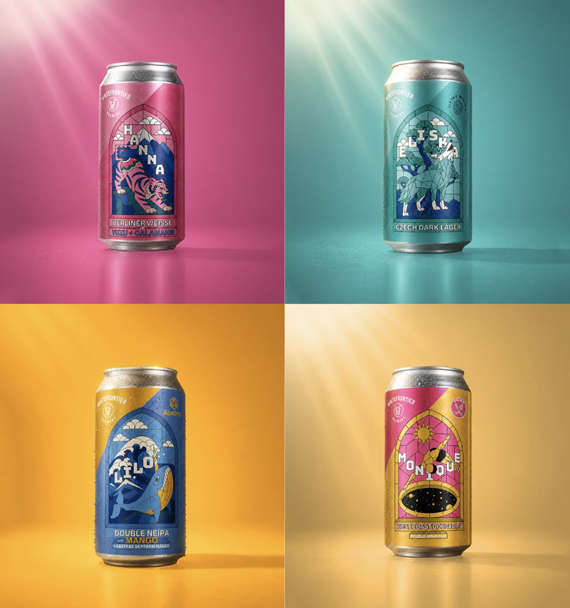
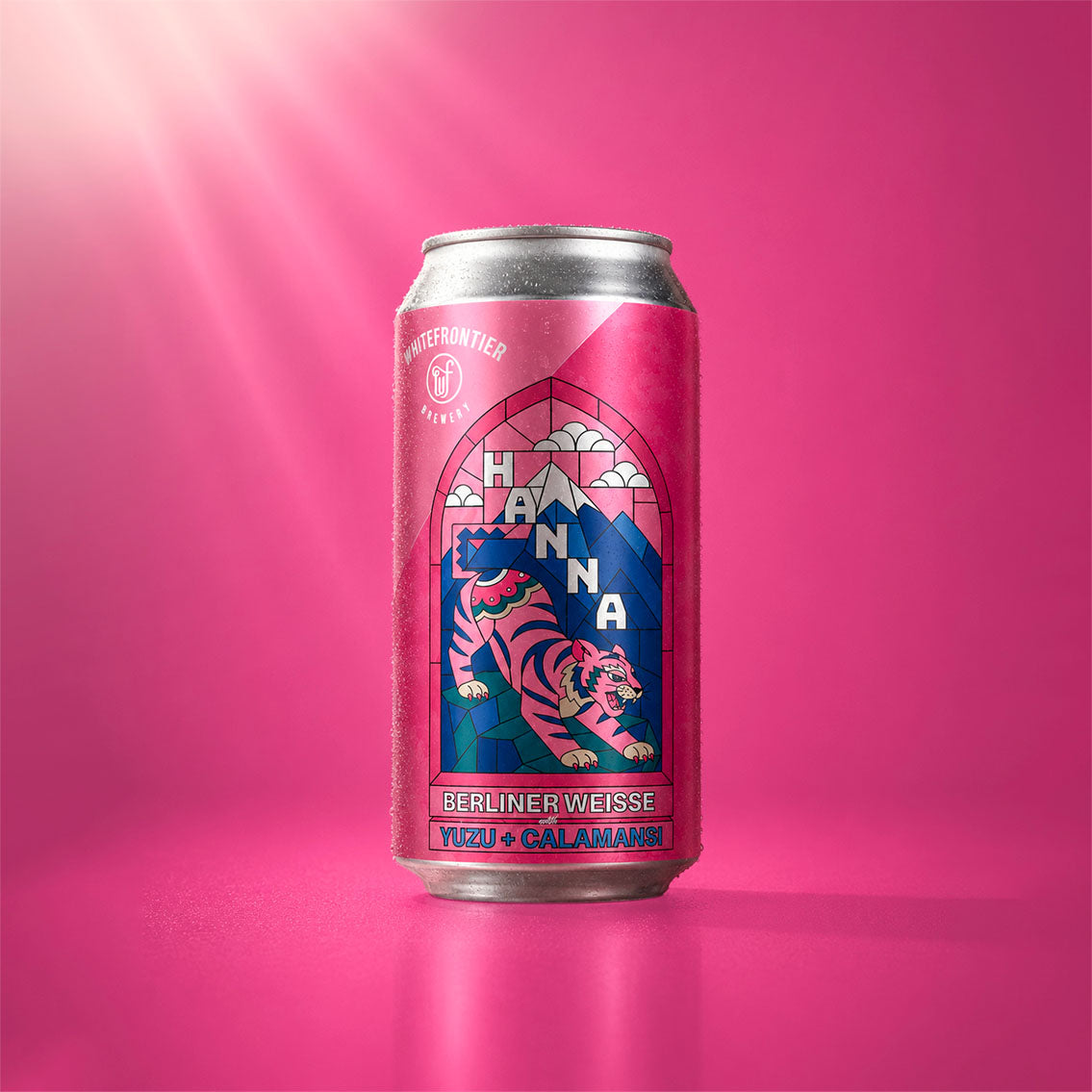
Another key point: design and storytelling.
A can offers far more surface than a bottle label to tell a story. Today, customers no longer just want to drink a beer. They want to know:
-
where it comes from
-
who brews it
-
why it is different
Served with a nice glass, the can becomes an element of experience, almost an object that people show, photograph, and comment on.
A hospitality industry context that requires differentiation
The current context is difficult. In Switzerland, beer sales in restaurants are down by about –3.3%, and the overall turnover of many establishments is under pressure.
In this context, continuing to serve industrial beers available everywhere in the world is rarely a winning strategy.
Between :
-
a customer who drinks a standard, interchangeable beer
-
and a customer who is served a local, modern craft beer, explained by the staff
👉 the second will remember the place and talk about it to others.
A concrete example: the WhiteFrontier Taproom in Martigny
At the WhiteFrontier Taproom in Martigny, the menu certainly offers draft beers, but also a wide selection of cans.
-
The first beer is CHF 5.–
-
Some exceed CHF 8.–
And yet, the establishment is always full. In two years, turnover increased by +57%.
Why ? Because customers are looking for meaning, authenticity, and discovery.
Why choose cans from a restaurateur’s perspective?
Not to follow a trend, but because they bring something extra :
-
superior product quality for many modern styles
-
simplified logistics (weight, storage, breakage, sorting)
-
fast chilling
-
strong visual impact at the table
And let’s remember: 43% of Swiss people already drink canned beer.
It’s not a bold gamble. It’s simply following the customer.
The restaurant Les Touristes in Martigny understood this very well: cans served at the table on menus sometimes exceeding CHF 100.– per person.
A winning bet. Modern, coherent, confident.


And what about ecology?
Aluminum is infinitely recyclable, with a recycling rate in Switzerland of around 95%, among the best in Europe.
For many customers, this has become a strong argument, especially when it comes to local beers and short supply chains.
Where to start?
If a restaurateur wants to get started, the idea is not to choose “the prettiest can,” but beers that are consistent with the identity of the place, which the staff can talk about with pride.
A few breweries that work particularly well with this format:
-
WhiteFrontier (Martigny) : wide variety of styles, colorful visuals, strong public recognition
-
Hoppy People (Sierre) : minimalist, modern, extremely well-crafted beers
-
Qrew (Vaud) : strong graphic universe, excellent beers, including alcohol-free
-
Outer Range (Chamonix region)
-
Ombrey (Zürich)
In conclusion
The can is neither a threat to a restaurant’s image nor a compromise on quality.
On the contrary, it is a powerful tool for differentiation, a storytelling medium, and a format perfectly aligned with current customer expectations.
And if some restaurateurs would like support in their choices, I would be delighted to advise them.
📩 carole@whitefrontier.ch